UX Lead, Design Consolidation
Microsoft Defender
Consolidating two design systems into one after Microsoft's acquisition of CyberX
- Enterprise
- Cybersecurity
- Design Systems
- Fluent Design
The Challenge
Microsoft Defender for IoT delivers comprehensive threat detection across IoT and OT environments, with flexible cloud, on-premises, and hybrid deployments. When Microsoft acquired the Israeli cybersecurity firm CyberX, it gained powerful OT security capabilities, and a major design alignment problem.
CyberX and Azure had completely different design systems. OT security workflows were highly specialized and didn't map cleanly onto existing Microsoft conventions. Investigations required switching between products, increasing cognitive load, and terminology and taxonomies were inconsistent, creating gaps in understanding between teams and users.
Click any image to enlarge
The Solution
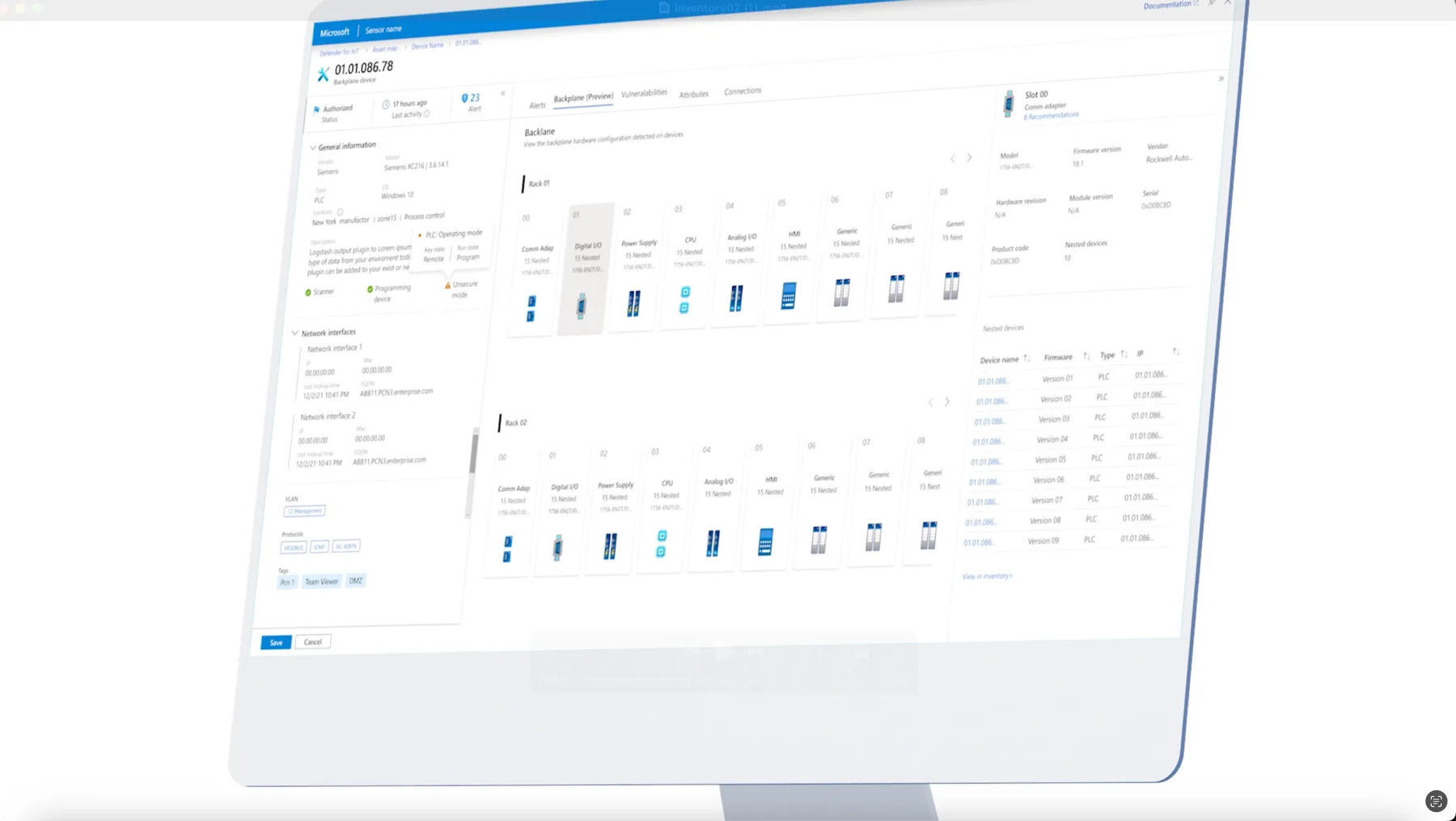
I led the UX consolidation effort to integrate CyberX into Microsoft's ecosystem: translating OT security concepts into a unified Microsoft taxonomy, redesigning CyberX's core interfaces using the Microsoft Fluent Design System, and standardizing controls, components, and layout patterns across both products. Hybrid deployment workflows were rebuilt to align with Azure's existing mental models.
The Result
A seamless experience that integrated CyberX's technology into the broader Microsoft security ecosystem, reducing cognitive load and improving cross-product usability for security teams working across both platforms.