PhD Student
The Face as a Platform
A genealogy of the self-portrait in the algorithmic age, PhD research
- PhD Research
- Visual Culture
- Interface Design
- AR
The Research
This research examines the relationship between humans and technology through the human face as a test case, asking how contemporary technologies such as biometric interfaces, augmented-reality masks and generative models are gradually converting the self-portrait from a marker of identity into data to be encoded, processed, and replicated.
It extends my thesis work "Changing Skins," which compared tribal and virtual masks, shifting the focus from the mask as object to the face itself. Its starting point: the contemporary self-portrait is no longer the product of a single author. When someone uses a filter or a face-editing interface, the photographed subject acts alongside the interface designers, the model creators, and the algorithmic system. The self-portrait is examined as a site of distributed authorship.
Click any image to enlarge
Three Threads
The research combines a genealogy of the self-portrait, from painting and photography through the selfie to the algorithmic face; a critical analysis of contemporary face interfaces and the design decisions embedded in them; and the development of an interactive exhibition prototype for an exploratory study of audience response, subject to Hebrew University ethics approval.
The theoretical framework draws on Donna Haraway's "Cyborg Manifesto," Bruno Latour's actor-network theory, Madeleine Akrich's concept of technological "scripts," and Michel Foucault's "author function", to examine how design decisions in face interfaces predefine what actions are possible, and what power relations and expectations they set for the user.
Exhibition Pilot: "Self-Portrait 2027"
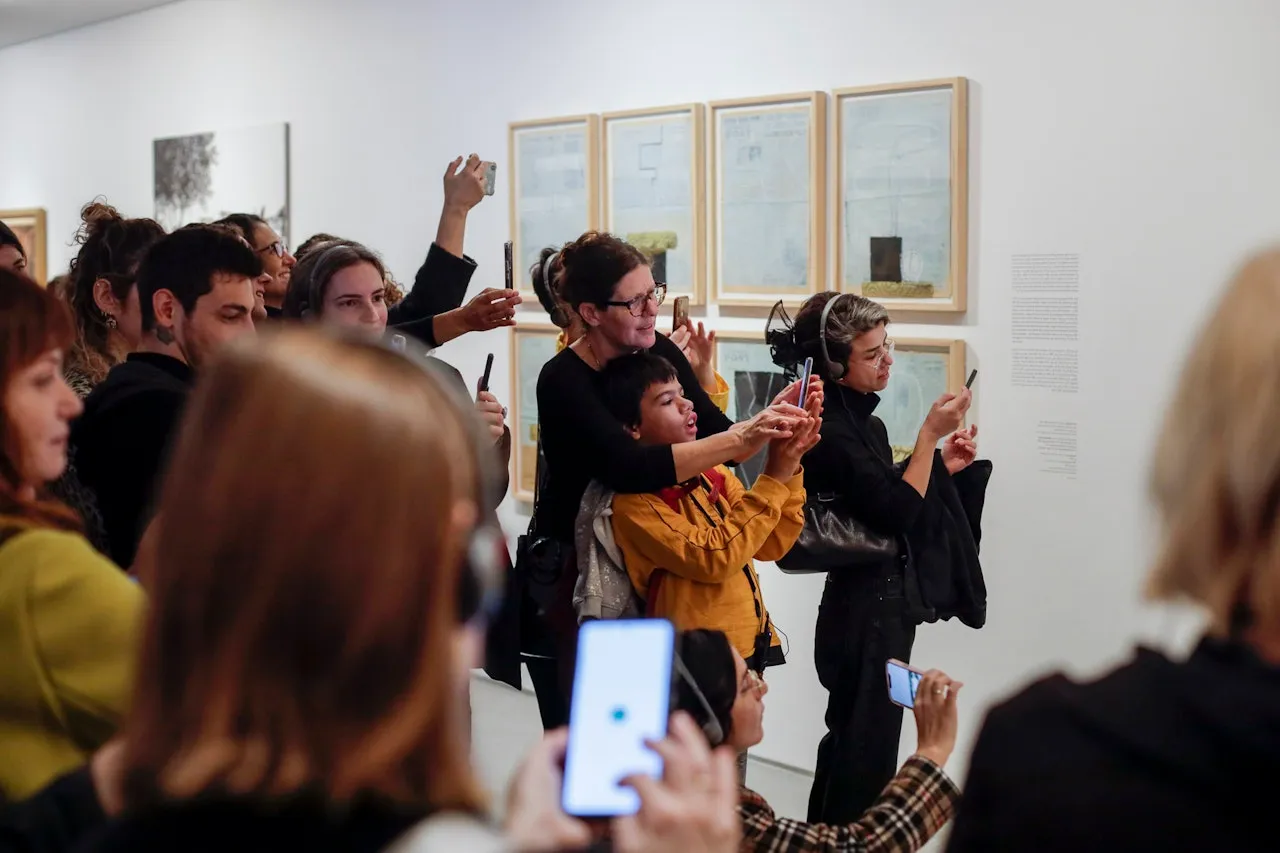
The year's second output will be a pilot for an interactive exhibition built on bside, the curatorial AR platform I developed during my M.A. at Bezalel, first shown in 2023 in the Israeli Art wing of the Israel Museum. In the pilot, the AR layer applies an algorithmic face-swap to a historical portrait, with explicit consent, and within a critical frame that stays transparent with the user about the terms and limits of the interaction.
Alongside the pilot, an academic article will anchor the genealogy, the critical analysis, and the resulting typology, intended for submission to a peer-reviewed journal in visual culture, communication, or design.
Funded research year: November 2026–November 2027.